TSMC’s 20 Fabs Under Construction: The Equipment Order Pipeline
TSMC’s construction activity is becoming a defining signal for semiconductor equipment demand. When the world’s largest contract chipmaker develops multiple manufacturing projects simultaneously, the consequences extend beyond concrete, cleanrooms, and regional investment announcements. Each project creates requirements for process tools, subsystems, installation teams, and continuing service.
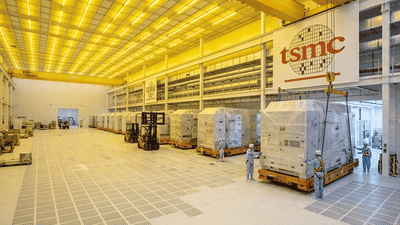
The “20 fabs” headline should be understood as an approximate description of facilities under concurrent development, not a verified list of twenty identical factories at the same construction stage. September 2026 reporting described thirteen projects in Taiwan and five to six overseas, alongside an increase in TSMC’s estimated equipment requirements to 1.9 times its original planning baseline. That requirement estimate was not equivalent to equipment spending already incurred or tools already ordered.
The central issue is conversion: how construction plans become equipment commitments, how commitments become installations, and how installations become productive capacity.
Why the Fab Count Needs Interpretation
A semiconductor manufacturing campus can contain several phases or production buildings. Public discussion sometimes describes those phases as separate fabs, while another account counts the campus as one facility.
Wafer fabrication and advanced packaging can also appear together in expansion summaries. Their equipment requirements differ, so combining them without explanation can distort the implied order opportunity.
The construction stage matters equally. Site preparation, structural work, cleanroom completion, equipment installation, and production qualification are different milestones.
For an equipment analyst, an approximate count is therefore a starting point. The useful next step is a project map showing facility type, technology, stage, and expected equipment move-in. That map provides more insight than multiplying twenty by an assumed average tool budget.
The Pipeline Begins Before Equipment Arrives
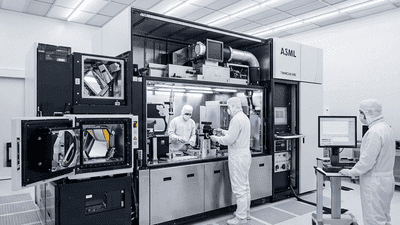
Tool planning usually precedes installation by a considerable interval. Customers need to identify process requirements, assess supplier capabilities, and coordinate delivery schedules with facility readiness.
Specialized systems may require long manufacturing and testing cycles. Reserving production capacity early can help protect a future ramp date.
However, planning does not establish that every tool has been ordered. A project can have an equipment strategy while individual purchases remain subject to technical selection, commercial negotiation, or scheduling decisions.
From a supplier’s perspective, the opportunity progresses through stages: customer discussion, evaluation, selection, order, manufacturing, shipment, and acceptance. The financial significance increases as uncertainty is removed from that sequence.
The 1.9-Times Requirement Signal Is Not a Revenue Forecast
A sharp increase in estimated equipment requirements indicates that the original plan no longer captures the customer’s expected needs. It can reflect additional capacity, revised schedules, or changes in the process and facility mix.
It does not mean every equipment supplier’s TSMC revenue will increase by 90%. Different tool categories have different exposure, and some requirements may be met through existing capacity or productivity improvements.
The timing also matters. Equipment needed for a future ramp can generate orders in one period and deliveries in another.
For investors, the figure is best treated as a demand-planning signal. Its significance becomes clearer when matched with actual supplier bookings, delivery schedules, and TSMC’s disclosed investment plans.
Front-End Tools Capture Different Parts of the Expansion
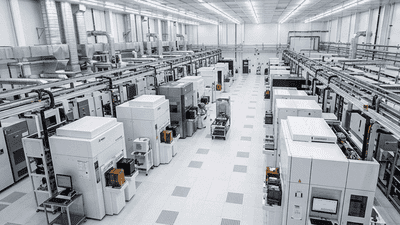
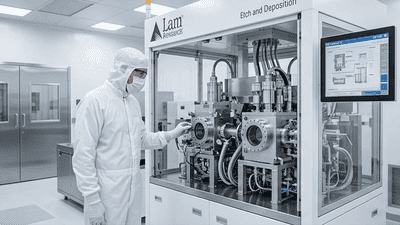
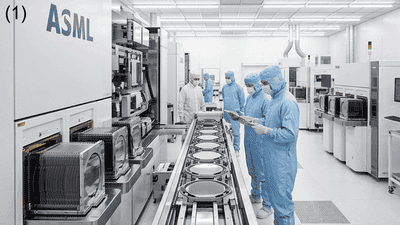
Wafer fabrication requires coordinated investment across lithography, deposition, etching, cleaning, implantation, planarization, and process control. A new facility needs a balanced production flow rather than simply a large number of high-profile machines.
The mix depends on the technology introduced and the capacity objective. A leading-edge project can require different capabilities from a specialty-process expansion.
Equipment suppliers also have different qualified positions. Two vendors associated with the same broad process family may address distinct materials, structures, or manufacturing steps.
This makes the order pipeline selective. The strongest analysis identifies which tools are required by each project and which suppliers have demonstrated suitability. General exposure to TSMC does not establish equal participation in every new facility.
Lithography Offers Visibility, but Not the Whole Story
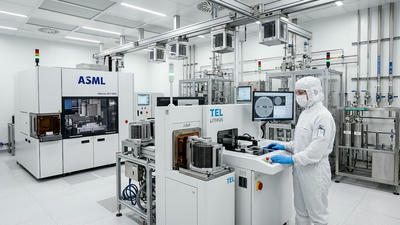
Lithography attracts attention because of its technical importance and the complexity of supplying advanced systems. A customer’s technology roadmap can create substantial forward planning requirements.
Yet lithography does not independently determine a fab’s output. Patterning must be supported by the equipment that deposits, removes, cleans, and measures the relevant materials.
A project can therefore generate significant demand across less visible categories. Some of those systems may become constraints if their delivery or qualification falls behind.
For a factory manager, the practical objective is complete process readiness. For investors, this means the equipment opportunity should be assessed across the line rather than inferred entirely from scanner orders.
Technology Transitions Can Increase Equipment Content
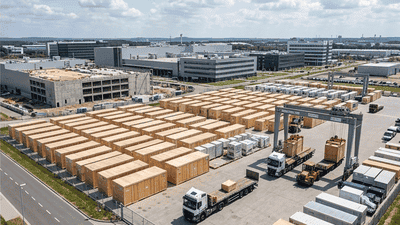
Construction creates space for manufacturing, but process development determines what occupies that space. New device structures and materials can alter the number and type of operations required.
That can support equipment demand even without a proportional increase in wafer capacity. Conversely, improved tool productivity or reuse of existing platforms can moderate incremental purchases.
The relationship between technology and spending is therefore not a fixed multiplier. It depends on the actual process choices and the equipment already available.
For suppliers, the attractive position combines capacity exposure with technical relevance. A vendor benefits more sustainably when its tool solves a problem that remains important through the customer’s transition, rather than serving only a temporary installation surge.
Advanced Packaging Creates a Parallel Equipment Pipeline
TSMC’s expansion discussion cannot be limited to wafer fabrication. Advanced packaging is increasingly important to integrating logic, memory, and other components into finished products.
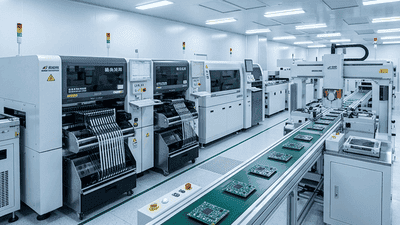
Those facilities can require bonders, lithography systems, deposition and cleaning capabilities, inspection, handling, and supporting process equipment. The exact mix depends on the packaging architecture.
This creates opportunities for both traditional back-end suppliers and companies whose expertise originated in wafer processing.
It also creates a classification challenge. A packaging tool using a familiar front-end process should not automatically be counted as demand for a conventional wafer fab. Analysts need to follow the application and market definition to avoid double counting.
Chiayi Illustrates Why Construction Stages Matter
September reporting on TSMC’s Chiayi development described one packaging plant in production and another entering equipment installation, while additional facilities belonged to later construction and expansion plans. The same reporting distinguished operating capacity from prospective additions.
For equipment suppliers, those stages imply different commercial opportunities. Installation-stage projects may support near-term deliveries and field work. Later projects provide potential demand that still depends on development and scheduling.
A proposed addition should not be treated as equivalent to a funded tool order. Nor should a facility already producing be counted as a new construction opportunity without considering further expansion.
The lesson is general: a site-level timeline is more useful than a headline plant count.
Validation Facilities Are Not Production Fabs
Not every semiconductor-related building creates the same equipment demand. Technology validation laboratories, training centers, and production facilities serve different purposes.
In September 2026, a new advanced packaging industrial park in Kaohsiung was described as a testing and validation hub for equipment and materials, with TSMC planning a validation laboratory and training center. Those facilities should not be counted automatically as high-volume production fabs.
Such projects can still matter strategically. They support process development, supplier evaluation, and workforce capability.
For financial modeling, however, their equipment budgets and revenue implications require separate treatment. Development infrastructure strengthens the ecosystem without necessarily creating the same immediate tool demand as a production line.
Overseas Projects Add Execution Complexity
Expanding across regions introduces differences in infrastructure, construction practices, workforce availability, and supplier support. Equipment vendors need installation and service capacity where the customer is building.
A tool can be completed at the supplier’s factory before the receiving site is ready. Alternatively, a prepared facility can wait for critical systems.
The challenge is coordination. Utilities, cleanrooms, logistics, permits, and trained personnel need to align with the equipment schedule.
For suppliers, international expansion can strengthen long-term customer relationships while increasing near-term support costs. For investors, revenue visibility should be considered alongside the resources needed to execute multiple installations across different locations.
The Subcomponent Chain Must Expand Too
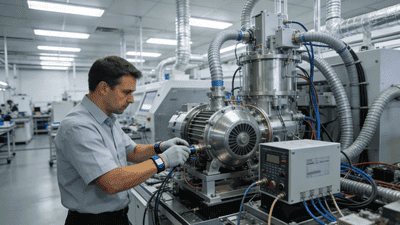
Complete equipment platforms depend on specialized pumps, power systems, precision motion, controls, valves, sensors, and chamber components.
A shortage in one qualified subsystem can delay a finished tool even when the equipment manufacturer has adequate assembly capacity.
TSMC’s project pipeline therefore creates indirect demand further upstream. Subsystem suppliers need to plan for both new equipment production and support of the growing installed base.
The opportunity is meaningful, but it should not be overstated. Different platforms use different configurations, and demand can shift between periods. The best evidence is increased accepted output and firm schedules, not a broad assumption that every component supplier benefits equally.
Installation Capacity Can Become the Next Bottleneck
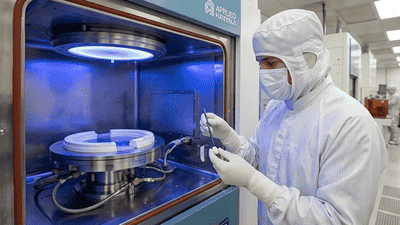
Shipping a system is not the end of the process. Tools require installation, verification, integration, and application work before they contribute useful production.
When several facilities ramp concurrently, field engineering becomes a capacity requirement of its own. Suppliers need qualified teams without weakening support for existing customers.
Training cannot always be accelerated as quickly as hiring. Application knowledge and troubleshooting experience develop over time.
From a customer’s perspective, the equipment pipeline is therefore also a people pipeline. From a supplier’s perspective, bookings growth must be supported by a realistic plan for installation and service. Otherwise, nominal delivery progress can outpace productive deployment.
Orders, Revenue, and Cash Flow Will Not Move Together Perfectly
A supplier can receive an order well before recognizing the associated revenue. Manufacturing progress, shipment, acceptance, and payment follow contractual and accounting arrangements that vary by transaction.
Large project activity can also increase working-capital requirements. Components and unfinished systems may accumulate before cash is received.
Schedule changes add another layer. A customer can remain committed while moving delivery because another part of the project is delayed.
For investors, this means healthy long-term demand can coexist with uneven quarterly results. The useful distinction is between lost business and timing displacement, supported by evidence about customer intent and execution.
How to Evaluate the Equipment Order Pipeline
A practical framework connects each project to the milestones that determine supplier revenue.
- Identify whether the facility is a wafer fab, packaging plant, or development center.
- Distinguish announced, under-construction, installation-stage, and operating projects.
- Map the relevant process technology and required equipment categories.
- Separate estimated requirements from confirmed supplier orders.
- Assess component availability and installation resources.
- Track qualification and ramp-up rather than treating shipment as completion.
This approach turns a broad expansion headline into an operating model. It also makes comparisons between equipment companies more meaningful.
What Could Change the Pipeline?
Customer demand, technology choices, site readiness, and equipment productivity can all change the scale or timing of purchases.
Some projects may accelerate while others proceed more gradually. Better utilization of existing capacity can reduce immediate tool needs, while a revised process can create demand for different systems.
These possibilities do not invalidate the construction program. They explain why the pipeline should be monitored rather than treated as a fixed revenue schedule.
The strongest suppliers remain responsive without assuming every preliminary requirement is permanent. Capacity planning needs enough flexibility to serve the expansion while managing the risk of timing changes.
The Real Signal Is Coordinated Manufacturing Expansion
TSMC’s roughly twenty concurrent developments point to a substantial equipment opportunity across fabrication and packaging. The headline is meaningful, but its commercial value depends on what each facility requires and when it becomes ready.
The reported increase in estimated equipment needs strengthens the demand signal without establishing a corresponding increase in orders already booked or revenue already secured.
The enduring winners will be suppliers that convert that planning demand into completed, qualified installations. Construction creates the space. Equipment execution determines how much of it becomes productive capacity.