Electrostatic Chucks and Ceramic Heaters: The Core Component Shortage
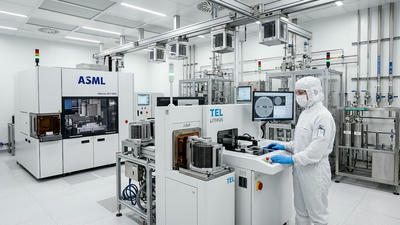
A semiconductor factory can have enough cleanroom space, a healthy equipment budget, and strong customer demand—and still struggle to add productive capacity. Sometimes the missing link is not a complete machine. It is a highly specialized component that holds a wafer in place or controls its temperature inside a process chamber.
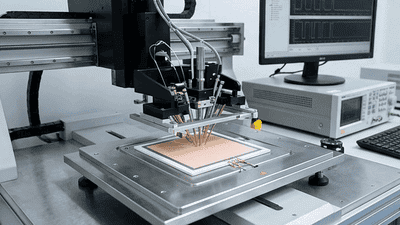
Electrostatic chucks and ceramic heaters occupy precisely that position. Their purchase prices are only part of a tool’s total cost, yet their performance can influence process uniformity, contamination, reliability, and usable output. When the required configuration becomes difficult to obtain, an equipment shipment or a maintenance plan can be delayed.
The shortage story is therefore about qualified supply, not simply ceramic production. Making more ceramic parts does not automatically create more usable chucks or heaters. The component must fit the equipment, survive its operating environment, and reproduce the conditions on which the manufacturing process depends.
What a Core Component Shortage Actually Means
The title should not be read as evidence that every electrostatic chuck and ceramic heater is currently unavailable. Supply conditions vary by manufacturer, application, model, and customer schedule.
A shortage can be narrow but consequential: one heater configuration with a long lead time, one qualified chuck required for a chamber platform, or one replacement assembly that cannot arrive before scheduled maintenance.
That specificity matters. A supplier may have general production capacity while lacking the materials, tooling, or testing resources for the exact product a customer needs.
For an equipment maker, the relevant question is whether a complete, accepted component will arrive in time to support tool testing and shipment. For a fab, it is whether the component can sustain the intended process without introducing unacceptable risk.
Electrostatic Chucks Do More Than Hold Wafers
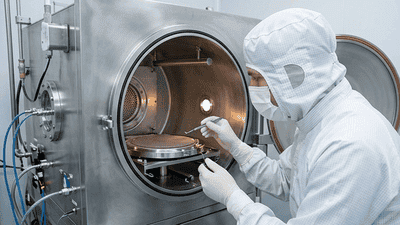
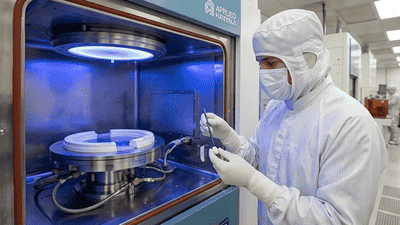
An electrostatic chuck uses an electric field to secure a wafer against a supporting surface. Its role can also include helping maintain flatness and providing a controlled thermal interface during processing.
The component therefore sits at the intersection of electrical, mechanical, and thermal requirements. Holding force, release behavior, material properties, surface condition, and temperature response all contribute to performance.
Commercial designs use materials including aluminum nitride and aluminum oxide, with properties tailored to the intended application. Some configurations integrate heating functions, while others operate with separate thermal-control arrangements.
From a process engineer’s perspective, the chuck is not an interchangeable fixture. It helps establish the boundary conditions experienced by the wafer. A replacement that looks similar can still behave differently enough to require evaluation.
Ceramic Heaters Create the Process Temperature Environment
Ceramic heaters deliver controlled heat in applications where temperature influences process behavior. Their purpose is not merely to reach a setpoint; it is to achieve the required temperature distribution and stability under operating conditions.
A heater must also work with its surrounding assembly. Electrical connections, sensors, mounting arrangements, gas exposure, and chamber geometry can affect the result.
Commercial manufacturing approaches embed metallic heating elements or electrodes within ceramic bodies. That integration makes the finished product more complex than a ceramic plate with an external heat source attached.
For an equipment designer, heater performance is part of the process platform. For a customer, the practical test is whether the assembly produces repeatable results across wafers and over time—not whether it passes a simple bench-top heating demonstration.
Why Aluminum Nitride Is Important—but Not Universal
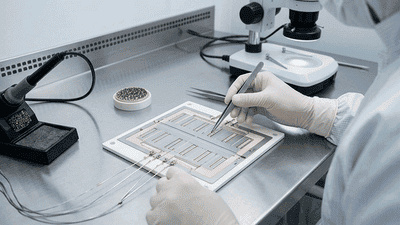
Aluminum nitride is attractive in these applications because it combines useful thermal conductivity with electrical insulation. Those characteristics can support temperature control in semiconductor equipment.
However, material selection depends on the actual operating requirements. Alumina and other materials can serve different configurations, and the choice involves more than one headline property.
Manufacturing quality also matters. Powder characteristics, additives, density, internal structures, machining, and finishing influence the behavior of the completed component.
For buyers, “made from aluminum nitride” is a starting description, not a complete performance specification. For emerging suppliers, it means that sourcing the right material is only one stage of developing a commercially usable product.
The Difficult Part Is Reproducing Performance
A supplier may produce a successful prototype and still face difficulty delivering repeated batches with the same behavior. Complex ceramic assemblies require control across several manufacturing stages.
Embedded structures must remain properly positioned. The ceramic body must achieve the required properties. Dimensions and surfaces must meet specification after thermal processing and machining.
Final testing then needs to establish that the component behaves appropriately, not merely that it has the correct shape.
This is why manufacturing yield can be a hidden capacity constraint. A factory’s nominal output does not equal the number of assemblies customers will accept. Increasing usable supply requires reducing variation and rejects as well as adding equipment.
Temperature Uniformity Is a System Requirement
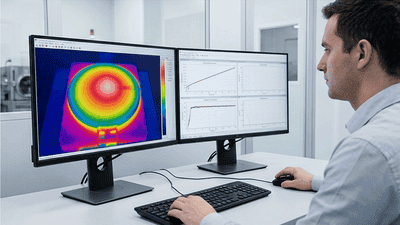
A heater’s specified temperature performance does not automatically describe the temperature experienced by a wafer during every process.
Heat transfer depends on the complete arrangement, including contact conditions, cooling, gas interfaces, chamber exposure, and the thermal load associated with processing.
For engineers, that means the component must be evaluated within a representative system. A measurement made under one condition may not establish suitability under another.
The same principle applies to comparisons between suppliers. Published uniformity figures are meaningful only when the measurement conditions are understood. Otherwise, a seemingly better number can conceal a different test setup rather than a genuinely better product.
Qualification Limits Emergency Substitution
When a delivery slips, purchasing teams naturally look for alternatives. But changing a chuck or heater can affect a process that has already been carefully established.
The replacement may require checks of fit, electrical behavior, thermal response, contamination, and operating consistency. The scope depends on the component and the intended application.
Customer evaluation can therefore become the limiting step even when another supplier has a product available. Physical availability and production readiness are different things.
The most effective resilience strategy is to qualify alternatives before an urgent shortage occurs. That requires resources, but it creates actual operating flexibility rather than a list of suppliers whose products have never been demonstrated in the equipment.
New Equipment Demand Competes with Replacement Demand
Component suppliers serve both expanding equipment production and the installed base. Existing tools need maintenance, repairs, and replacement assemblies, while new systems need components before shipment.
Those requirements can overlap during an investment upswing. A supplier must decide how to allocate limited output among customers building future capacity and customers protecting production already underway.
For a fab manager, an unavailable replacement can be more urgent than a delayed new tool. For an equipment manufacturer, missing the component can prevent a nearly completed system from leaving the factory.
This creates a planning challenge across the chain. Capacity forecasts need to include service obligations, not assume that every additional unit can be directed toward new equipment sales.
Front-End Exposure Is Direct; Back-End Exposure Is Selective
Electrostatic chucks and ceramic heating assemblies are strongly associated with wafer-processing equipment. Their direct relevance is clearest in applications requiring controlled support and temperature inside demanding process environments.
Selected advanced packaging processes also use wafer-level handling and thermal-control capabilities. However, conventional assembly operations do not all depend on the same component architectures.
The back-end impact should therefore be mapped by process step. A packaging flow may have a critical heating or wafer-support requirement, while another relies on very different equipment.
The wider connection is capacity balance. If a missing front-end component reduces wafer output, downstream assembly can lack material. If a packaging process is constrained, additional front-end output may not become finished-device shipments.
Localization Must Reach Below Final Assembly
Regional suppliers can offer closer engineering support, shorter logistics routes, and more responsive service. These are meaningful advantages, particularly when customers need troubleshooting or replacement components.
However, local final assembly does not necessarily establish independent supply. Imported powders, specialized equipment, coatings, or electrical parts may remain important dependencies.
A useful localization assessment asks which activities occur locally and which inputs could interrupt production. Ceramic forming, sintering, precision machining, functional integration, and testing represent different capabilities.
The strongest programs build those capabilities in a deliberate sequence. They do not need to localize everything immediately, but they need a realistic understanding of which dependencies still affect delivery and support.
Refurbishment Can Help, Within Defined Limits
Repair and refurbishment can extend the usefulness of selected assemblies and reduce pressure on new-component supply. The appropriate route depends on the failure mode, construction, and application.
Not every worn or damaged component is recoverable. A successful repair also needs verification that the restored assembly remains suitable for its intended operating conditions.
For customers, refurbishment is best evaluated as a qualified service rather than a low-cost shortcut. Traceability, test results, warranty scope, and realistic useful life all matter.
For providers, the opportunity involves inspection and judgment as much as repair work. The ability to identify unsuitable candidates is essential to maintaining a credible recovery business.
The Financial Impact Exceeds the Component Price
A delayed chuck or heater can affect revenue far beyond its own selling price. Equipment makers may accumulate unfinished systems, while customers may postpone installation or lose operating time.
Expedited logistics, schedule changes, additional testing, and engineering work can also increase costs. A narrow supply problem can therefore have a broad financial footprint.
For investors, this creates a distinction between demand weakness and execution constraints. Strong orders can coexist with disappointing shipments when critical components are missing.
Component suppliers also require scrutiny. Strategic importance can support their commercial position, but expansion costs, manufacturing rejects, qualification effort, and customer concentration determine whether that position produces attractive returns.
Inventory Needs to Match the Operating Risk
Holding spare components can protect against interruptions, but inventory is useful only when it matches the required configuration and remains suitable for installation.
A broadly similar assembly may offer little immediate protection if it requires uncompleted qualification or different interfaces.
Customers also need to balance stock against capital commitments and changing equipment designs. Excess inventory can become less useful as platforms evolve.
A disciplined approach identifies critical applications, realistic replacement needs, and the consequences of delay. It then places buffers where they can support a defined operating requirement rather than applying one blanket stocking policy.
What to Watch Before Declaring a Structural Shortage
The most informative indicators connect supply conditions with accepted output and customer operations.
- Track lead times for specific qualified configurations.
- Distinguish capacity limitations from manufacturing-yield problems.
- Examine replacement demand alongside new-tool demand.
- Look for repeat deliveries from alternative suppliers.
- Assess testing and engineering capacity as well as factory expansion.
- Monitor unfinished equipment and component-related downtime.
These measures help separate a temporary delivery problem from a more persistent constraint. They also make the shortage discussion more useful than unsupported market-wide claims.
The Core Component Is a Core Capability
Electrostatic chucks and ceramic heaters show why semiconductor capacity depends on more than complete-tool orders. Their value comes from the operating conditions they help create and preserve.
Improving supply therefore requires more than additional ceramic production. It requires controlled manufacturing, application-specific qualification, service capability, and coordination between suppliers, equipment makers, and fabs.
The durable advantage belongs to companies that deliver repeatable component performance when customers need it. In this market, the decisive product is not simply a chuck or a heater. It is confidence that the process can keep running.