CXMT’s DDR5 Production Ramp: China’s DRAM Self-Sufficiency Progress
China’s progress toward a more self-sufficient memory supply chain is increasingly being tested in production rather than in product announcements. For ChangXin Memory Technologies, better known as CXMT, DDR5 is a particularly important proving ground. It moves the company further into the memory requirements of contemporary PCs, workstations, and servers while challenging it to deliver consistent performance at commercial scale.
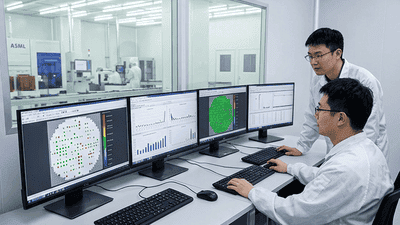
CXMT’s published DDR5 portfolio includes 16Gb and 24Gb die capacities and data rates reaching 8000 megabits per second. Those specifications establish a product offering, but they do not mean every configuration operates at the maximum rate or that all server platforms have qualified the devices.
The central issue is conversion: converting manufacturing investment into accepted chips, chips into dependable modules, and modules into customer deployments. That sequence—not a headline wafer-capacity target—determines how much domestic supply becomes economically useful.
DDR5 Marks a Different Stage of Competition
DDR5 brings CXMT into a market where customers evaluate more than nominal capacity. Data rate, power behavior, reliability, compatibility, and the performance of the finished module all matter.
The opportunity is broader than replacing an imported component in one product. A qualified domestic offering can give system manufacturers another sourcing option and reduce dependence on a limited group of established suppliers.
However, the requirements differ across customer segments. A consumer desktop module, notebook design, workstation, and enterprise server do not follow identical approval processes.
For analysts, the useful question is therefore where CXMT has demonstrated usable supply. Progress should be mapped by application rather than summarized as immediate readiness for the entire DDR5 market.
The G5 Announcement Needs a Product Distinction
CXMT’s September 2026 announcement concerned mass production of its fifth-generation DRAM technology platform, known as G5. The products unveiled alongside it were two 24Gb LPDDR5X devices for smartphones and portable electronics—not a declaration that the entire DDR5 portfolio had moved to G5.
That distinction matters because DDR5 and LPDDR5X serve different platform requirements. A manufacturing-platform advance can support the broader company roadmap without proving identical maturity across every product family.
The announcement nevertheless adds context to the DDR5 ramp. It indicates continued process development rather than reliance on one static generation.
For investors, the appropriate interpretation is technological progress with product-specific commercialization. The next questions concern yields, qualified output, and where the newer platform is actually deployed.
Wafer Capacity Is Not the Same as Memory Supply
Capacity estimates often dominate discussions of CXMT’s expansion. They are useful for understanding ambition, but they do not directly measure the quantity of memory customers can buy.
Wafer starts count material entering production. Accepted dies depend on manufacturing yield, product design, testing, and the mix produced. Finished modules require additional assembly and qualification.
A company can expand wafer activity while still working to improve usable output. Conversely, better density and yields can increase saleable bits without equivalent growth in wafer starts.
For a market analyst, the relevant measure is qualified commercial supply. Comparing manufacturers solely through monthly wafer figures can create an inaccurate picture of competitive scale.
The Yield Ramp Determines the Commercial Pace
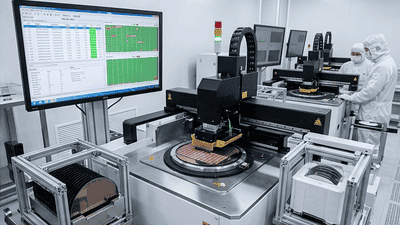
DRAM manufacturing requires repeatable control across many processing steps. A functional die is not automatically a die that meets every intended speed, power, and reliability requirement.
Production can therefore generate different grades and configurations. The portion reaching the target specification affects both available supply and economics.
This is why unverified yield percentages deserve caution. A single number can conceal the product, test conditions, period, and acceptance criteria being measured.
From a customer’s perspective, consistent deliveries matter more than a best-case production claim. From a supplier’s perspective, improving yield supports cost competitiveness and reduces the uncertainty associated with expanding output.
Module Ecosystem Support Is a Meaningful Step
DDR5 chips reach many customers through memory modules rather than as standalone components. Module makers integrate the dies with additional devices, boards, programming, and testing.
Reported motherboard support and firmware updates for CXMT-based modules indicate progress in that ecosystem. They show that integration work is occurring beyond the chip manufacturer.
However, compatibility on a particular board does not establish universal platform acceptance. A successful enthusiast configuration is also different from a validated enterprise deployment.
For analysts, ecosystem support should be treated as a practical commercialization milestone. Its significance grows when it becomes broad, stable, and connected to repeat purchases rather than isolated demonstrations.
Overclocking Results Are Not Enterprise Qualifications
High data-rate demonstrations can attract attention and reveal engineering potential. They do not define the normal operating conditions of every shipped product.
An overclocking result depends on the processor, motherboard, firmware, module configuration, voltage, and test method. It should not be substituted for a supported production specification.
Enterprise buyers place greater emphasis on validated behavior across their intended conditions. Performance consistency, error management, and serviceability can matter more than a record-setting demonstration.
For CXMT, the strongest evidence will combine attractive specifications with dependable operation in mainstream platforms. That is what allows a product to move from interesting hardware into routine procurement.
Server Memory Raises the Commercial Standard
Enterprise servers often use memory configurations different from those of consumer PCs. Qualification addresses the complete platform and the conditions under which it is expected to operate.
A module can meet an advertised capacity and speed while still requiring further validation for a particular server.
This can slow adoption, but it also creates a valuable position once approval is achieved. Customers generally prefer predictable supply of products they already understand.
For a domestic-memory strategy, server participation is therefore significant. It broadens the addressable market, but the investment case should follow demonstrated deployments rather than assume that a DDR5 product listing establishes enterprise readiness everywhere.
Domestic Demand Can Absorb a Large Expansion
Additional Chinese memory production does not automatically create an equivalent increase in supply available to global buyers. Domestic customers may absorb a substantial portion.
September reporting described CXMT increasing the share of DDR5 and LPDDR5 in its product mix, with additional output expected primarily to serve domestic markets. The capacity figures in that reporting were estimates, not guaranteed qualified shipments.
The commercial implication is two-sided. Local demand can support a ramp, while limiting immediate relief in other channels.
For investors, the important question is the balance between accepted output and reachable customer demand. Factory expansion alone cannot establish whether the market is approaching surplus.
Self-Sufficiency Has Several Layers
A domestically manufactured DRAM chip can still rely on internationally sourced equipment, materials, software, or specialized components.
That does not negate the value of local production. It does mean that semiconductor manufacturing capability and complete supply-chain independence are separate objectives.
A realistic assessment identifies the activities performed domestically and the remaining dependencies that could affect delivery or support.
For customers, greater local availability can improve resilience even before every input is localized. For policy makers, the next priorities may lie deeper in the manufacturing chain. Both perspectives benefit from a precise definition rather than a broad claim that self-sufficiency has been completed.
Cost Competitiveness Must Survive the Ramp
Domestic supply can be attractive on price, but a sustainable business requires acceptable manufacturing economics. Yield, density, utilization, capital expenditure, and testing all contribute to cost.
A supplier can gain orders through aggressive quotations while still facing difficult returns. Conversely, process improvements can strengthen competitiveness without a dramatic change in headline specifications.
For customers, the relevant comparison includes reliability, support, and lifetime availability alongside purchase price.
For investors, the strongest outcome is growth that produces better cash generation after necessary investment. Strategic importance and shipment expansion do not guarantee profitability by themselves.
DDR5 Growth Can Influence the Legacy-Memory Balance
As CXMT expands newer products, its own allocation decisions can affect how much attention and output remain available for earlier generations.
That creates a trade-off similar to the one faced by established suppliers. Customers still using legacy platforms may need support even as newer markets become more attractive.
The company does not need to make one uniform choice across every product. Demand, qualification, and manufacturing flexibility can support a differentiated approach.
For analysts, the relevant measure is the actual mix of qualified output. A DDR5 ramp should not be interpreted automatically as the immediate disappearance of all legacy supply.
NAND Is a Separate Self-Sufficiency Story
CXMT’s progress concerns DRAM. NAND flash uses a different memory technology and supports persistent storage rather than conventional working memory.
China’s NAND development therefore needs its own analysis of manufacturing, product qualification, and commercial output. It should not be inferred from CXMT’s DDR5 milestones.
The connection comes through systems using both. A PC or server can combine domestic DRAM with domestic NAND-based storage, potentially broadening local sourcing.
But each component must meet its own requirements. Success in one memory category does not establish success in another, and a complete system depends on the weaker or less available part of its supply chain as well as the stronger one.
Enterprise Storage Benefits Indirectly from DRAM Choice
Storage appliances and servers use working memory to support software, data management, and operating tasks. Their architecture can therefore benefit from additional qualified DDR5 sourcing.
The SSD itself remains a separate product with NAND, controllers, firmware, and its own validation requirements. A DRAM milestone does not automatically qualify a storage drive.
For a system manufacturer, the opportunity is broader component choice. For an enterprise buyer, the relevant result is a complete supported platform.
For investors, these connections should be followed through actual product design and deployment rather than converted into a general claim that every enterprise-storage business benefits equally.
Global Pricing Impact Will Be Application-Specific
Additional DDR5 supply can increase competition where it reaches qualified customers. That can influence negotiations and reduce dependence on individual providers.
The effect may be limited in applications where qualification is incomplete or supply is committed elsewhere.
This means global price pressure can develop unevenly. Consumer modules, local server products, and internationally validated enterprise platforms need not respond at the same time.
A strong market model therefore separates output from market access. The existence of more chips matters commercially when buyers can use them and suppliers can deliver them under the relevant conditions.
What to Watch in the Next Phase
The most informative milestones connect manufacturing progress with recurring use.
- Track DDR5 products separately from G5-based LPDDR5X announcements.
- Examine qualified output rather than wafer-capacity targets alone.
- Look for repeat module and system purchases.
- Distinguish enthusiast performance from supported enterprise operation.
- Follow domestic demand and exportable availability separately.
- Assess costs, support capability, and cash generation alongside shipments.
These indicators provide a more dependable picture than unsupported market-share projections or a single production-ramp headline.
Three Possible Paths from Here
A successful broadening scenario combines stable DDR5 yields, expanding platform support, and repeat customer adoption. Domestic availability improves, and competition reaches additional applications.
A concentrated scenario produces strong progress in selected products while broader server qualification develops more slowly. The business grows without immediately matching the full range of incumbent capabilities.
A difficult ramp involves uneven yields, delayed approvals, or costs that weaken the commercial benefit of expansion.
These scenarios are analytical frameworks, not forecasts with assigned probabilities. Their purpose is to identify what operating evidence would support or challenge the self-sufficiency thesis.
The Milestone Is Dependable Supply
CXMT’s DDR5 offering and continuing DRAM-platform development mark meaningful progress in China’s memory capabilities. The achievement becomes more significant as products move through modules, validated systems, and repeat deployment.
However, national self-sufficiency is not established by one company’s capacity plan or one technology announcement. It requires dependable output, qualified applications, and a resilient supporting chain.
The lasting test is straightforward: can customers obtain memory that performs consistently, arrives reliably, and remains economically supportable? That is the point at which a production ramp becomes a durable supply capability.